
SIGN UP FOR HEALTH AND FITNESS UPDATES
Posted on 3/7/2025 at 11:29:58 AM


"One important key to success is self-confidence. An important key to self-confidence is preparation." - Arthur Ashe
Today, I’m writing the second article in our monthly series, “Taking Flyte," showcasing friend and partner Steve Weatherford’s advice on topics relating to health, fitness, and wellness. Last month, Steve reflected on the ups and downs of 2015. Today, Steve shares his thoughts on how he prepares to perform at his best: before, during, and after a big event.
There’s no bigger event for a professional football player than the Super Bowl. Steve shared how he mentally prepared throughout his experience with the New York Giants in Super Bowl XLVI. The Giants won 21-17 over the New England Patriots and Steve played a pivotal role, pinning three punts within the Patriots' 20-yard line (two within the 10-yard line) which created field position havoc for the opposition. So, how did he mentally prepare for the biggest event of his life? We asked him.
Entering the Super Bowl, how did you mentally prepare for the big event?
Weatherford: “You treat it like anything else. I draw my confidence from knowing that I did every single possible thing up to that point to prepare myself for that one moment to be the greatest in the world. It's not that I had to go do yoga and find my Zen. For me, hard, hard, hard freaking work in the off-season is where I get my confidence.”
I’ve seen this hard work first-hand myself. We discussed how he prepared for the Super Bowl while we worked out in a marathon session that included an intense Core Flyte workout and what he calls “ARMageddon,” an all-out assault on every area of the tricep and bicep muscles. My arms felt like jelly for a couple of days after!
You’re playing in the Super Bowl. The stakes are high. How did you stay mentally focused?
Weatherford: “Nobody was having more fun in that game than I did. I was celebrating. I was hopping around. I was having fun. I was giggling. I know that you're only as good as your next play. For me, my first punt at the Super Bowl led to two points for us [a safety on Pats superstar Tom Brady]. That's as good as it gets for a punter. It's about being excited that you did well and then letting that go and focusing on the next play. Same thing if you had a bad one. If you have a bad one you let that go… short-term memory is key.”
Steve reminds those of us who know him that you can perform at a high level and have fun at the same time: they are not mutually exclusive. The important thing is to focus on your role and execute well each step of the way. In fact, for many people, having fun helps them stay loose – especially in a high-pressure situation – which can improve performance.
You won the Super Bowl. How did you mentally absorb such a big win?
Weatherford: “It’s important to celebrate. If you asked me before the game, ‘How many beers would have after you won the Super Bowl?’ I would have told you ‘all of them!’ But after the Super Bowl, I’m not kidding you, I went to the Super Bowl post-party and there were celebrities everywhere and everyone is partying and having a good time… but I had one drink, a Jack and Coke. I drank that drink and I looked at my wife and said, ‘I don’t want to feel any different. I’m not drinking anymore.’ With the euphoria that came from a lifetime of preparation to achieve a lifetime goal, I didn’t want to feel any different. I didn’t need alcohol to feel any different. I had just one drink. I enjoyed the celebration for about three hours with my mom, my dad, my in-laws, my son, and my daughter. I ended up going to bed around two in the morning. That was earlier than every single one of my teammates.”
Steve is a fun guy. His energy is insane. At the Super Bowl, he was as excited as anyone. At the end of the day, however, he was able to keep the achievement in perspective and enjoy it for what it was: the pinnacle of athletic accomplishment. And he did it with his family, which now includes two more children. And who knows… maybe while he was celebrating he was secretly thinking about his next workout!
We’d love to hear from you. How do you mentally prepare for a big event? Comment below or on our Facebook page or tweet us at @flytefitness.
Be Flyte Fit,
Jeremy Greenberg
Co-Founder & CEO
Flyte Fitness
P.S. DON’T FORGET TO SIGN UP FOR FITNESS UPDATES! CLICK THE BOX AT THE TOP OF THIS PAGE!
Posted on 1/19/2016 at 10:06:00 AM
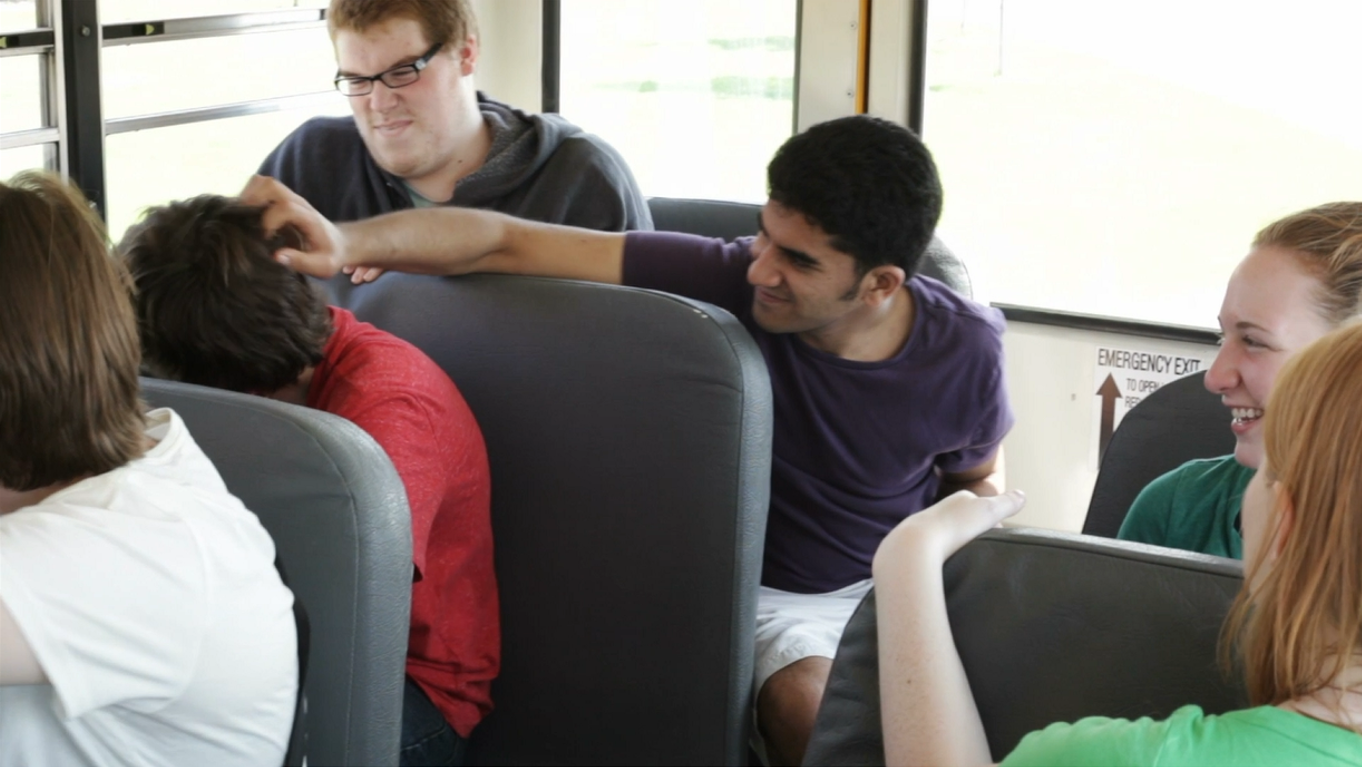
"Bullying is killing our kids." - Cat Cora, chef
While bullying isn't new, cyber-bullying is quicker, easier, and has a wider reach. Just as we can now protest by tweeting a brief note followed by a hashtag, bullies can hide behind the comfort and secrecy of their social media apps.
The first major bullying research was conducted by Norwegian psychologist Dan Olweus in the 1970s. Olweus was motivated by a series of school-age suicides by victims of bullying. He found that bullies seek to gain the affection of others while picking on those they view as vulnerable. Gay and lesbian teens get bullied up to three times more than their heterosexual peers.
I imagine nearly all moviegoers rooted against bullies Biff Tannen in Back to the Future and Regina George in Mean Girls. We empathize with the "little guy." Back in the school hallways, however, life is very different. Bullies generally get away with their behavior because bystanders tacitly support them by not intervening. The consequences of bullying can be catastrophic. Suicide is the second-leading cause of death for adolescents in the U.S. and the number one cause in many countries across the globe. Social isolation – often through bullying – is a significant driver. With nearly 20 percent of students in the U.S. reporting that they are being bullied on school property, this is an important issue for us to address.
We have published blogs on research that touts the benefits of exercise on mood, stress, and energy. However, until now there has not been a comprehensive study on the impact of exercise on suicide rates of bullied children.
A study by the University of Vermont evaluated the impact of exercise on suicide rates of teenagers who report being bullied. Over 13,500 high school students who were part of the CDC's National Youth Risk Behavior Survey were carefully tracked. The bullied students who were physically active four or more days per week had a 23 percent lower rate of suicidal ideation and attempts compared with bullied students with less regular activity. The more active group also reported reductions in sadness.
The study's lead author, Jeremy Sibold, associate professor and chair of the Department Rehabilitation and Movement Science at the University or Vermont, said, "Even if one kid is protected because we got them involved in an after-school activity or in a physical education program it's worth it."
This finding comes out at a time when physical education programs are getting slashed across the country. Although physical education has been linked to reduced obesity and improved academic performance, it is being sidelined in favor of classes that are fixated on boosting test scores. Harvard professor Dr. John J. Ratey, said, “There is shrinking P.E. for our kids,” Dr. Ratey. “P.E. teachers are fighting like cats and dogs to hold the line on their jobs and worth, at the same time as there is a dawning awareness that we have missed the boat.”
Nearly half of all high school students reported that they had no physical education classes in an average week, according to the Center for Disease Control and Prevention.
The University of Vermont study concludes: "Considering the often catastrophic and long-lasting consequences of bullying in school-aged children, novel, accessible interventions for victims of such conduct [such as physical activity programs] are sorely needed."
René Veenstra, a sociologist at the University of Groningen in the Netherlands, says that 85 percent of bullying cases occur to gain attention. Let's work on increasing the attention that is given to proven measures, including exercise, to help victims of bullying.
We'd love to hear from you. How have your experiences with bullying affected you and how has exercise helped you deal with them? Comment below or on our Facebook page at facebook.com/flytefitness, or tweet us at @flytefitness.
Be Flyte Fit,
Jeremy Greenberg
Co-Founder & CEO
Flyte Fitness
P.S. DON’T FORGET TO SIGN UP FOR FITNESS UPDATES! CLICK THE BOX AT THE TOP OF THIS PAGE!
Posted on 9/22/2015 at 8:24:00 AM
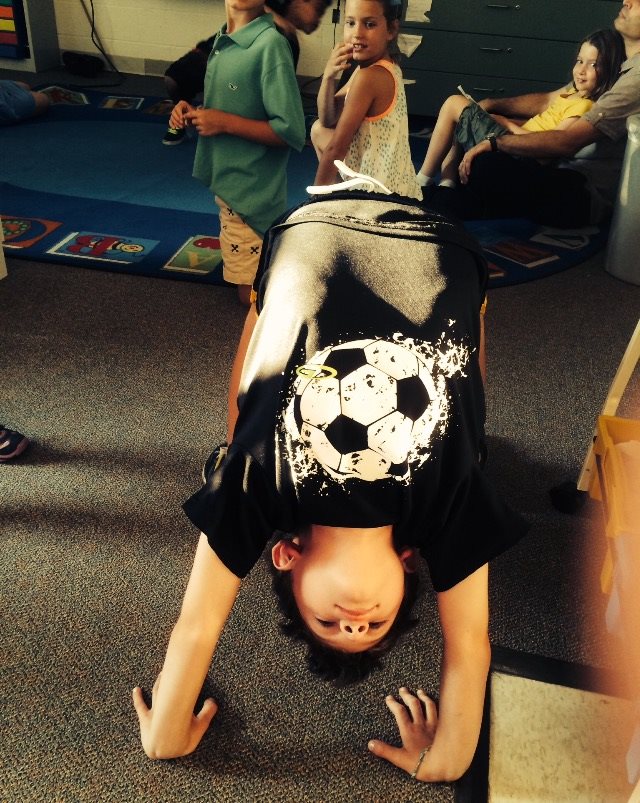
"Between the fifth and sixth grades, children reduce activity levels an average of 50 percent" - Rod Dishman, professor of kinesiology at the University of Georgia
Posted on 9/8/2025 at 10:45:00 AM
“You better cut the pizza in four pieces because I’m not hungry enough to eat six.” – Yogi Berra, Hall of Fame Major League Baseball Player
Our company, Flyte Fitness, is an exercise equipment company. I am very proud of the Core Flyte stability trainers that we offer, as well as our classes, workout programs, and exercise videos. Working out – whether at home, at the gym, or on the road – is critical to living a healthy life. I write often about the benefits of exercise. Nutrition deserves equal, if not more, attention. Fortunately, a good friend and colleague of mine, Sohailla Digsby, offered to share her wisdom with us for this week’s blog.
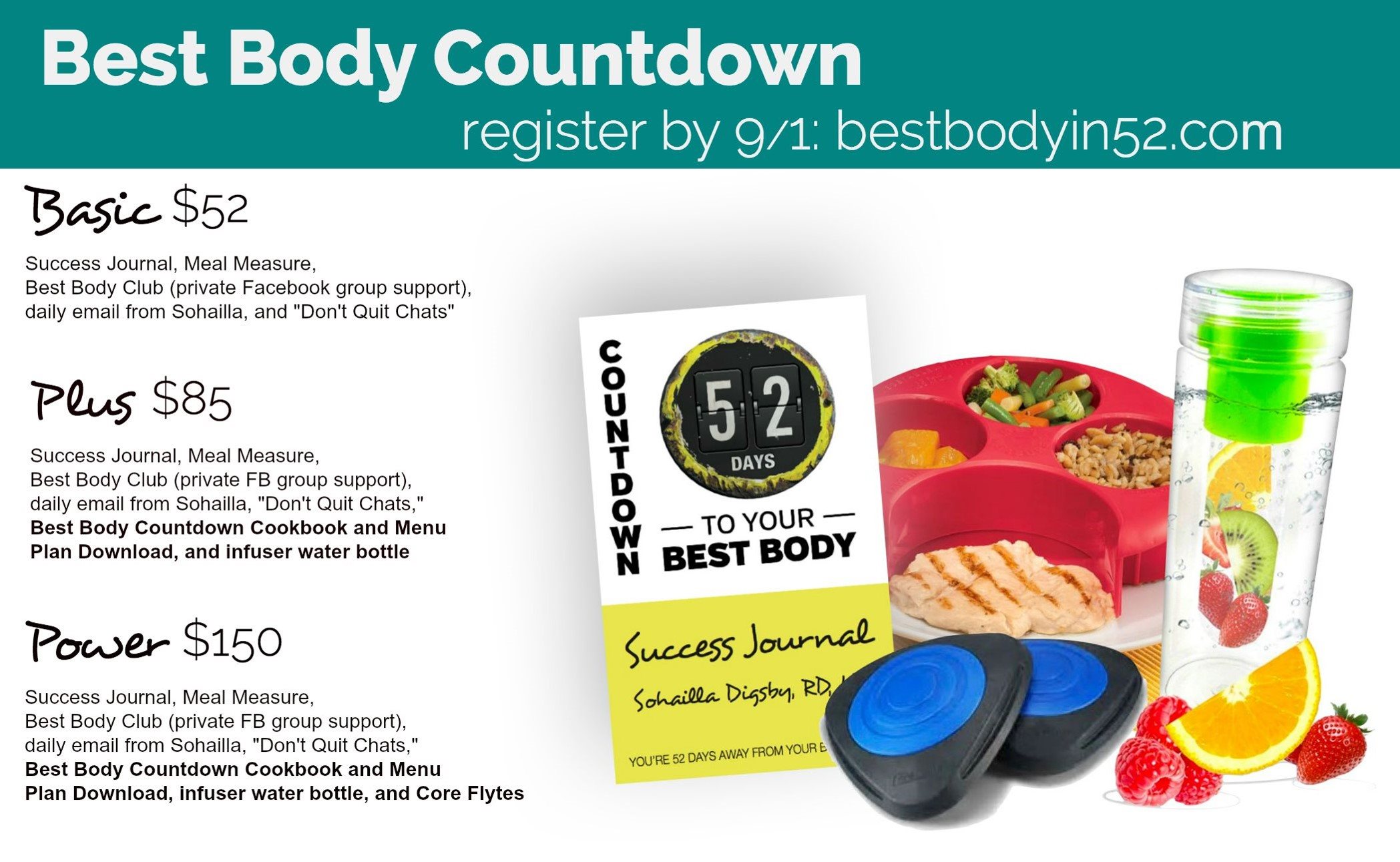
Sohailla is a registered dietitian, certified group fitness instructor, author, and public speaker. She also is the owner and operator of Best Body Nutrition and Fitness. Her Best Body Countdown program is well-respected within the health community as a way to transition people into a healthier lifestyle with simple, incremental, and effective steps.
In the above video, Sohailla speaks about her philosophy on nutrition and exercise. I encourage you all to watch it.
Here are her “Countdown 5-4-3-2-1” steps that she gives her clients for making changes one at a time to improve their bodies:
5. Limit sugar to 5 grams of added sugar per day, gradually increasing to the American Heart Association’s maximum.
4. Drink 4 water bottle equivalents, two cups per bottle, each day. This should be pure water and does not include drinks such as coffee or diet soda.
3. Eat 3 balanced meals every day. Keeping our bodies fueled is very important. We make better eating decisions when we are not extremely hungry.
2. Consume 2 servings of veggies at two of the day’s meals. Make sure these are non-starchy vegetables. Potatoes don’t count!
1. Do 1 hour of moving each day. 30 minutes of vigorous activity and 30 minutes of deliberate movement that gets the blood pumping a bit.
Following these basic steps is a great way for all of us to improve our health, increase energy, and recover better from workouts. Sohailla’s clients have seen tremendous results by following these steps, with her program’s tools and her support.
Registration for Sohailla’s next Best Body Countdown program begins on August 12th. So, if you like what you hear and would like to learn more, either for yourself or for your clients, visit her site here.
We'd love to hear from you. What do you think about Sohailla’s message on nutrition? Comment below or on our Facebook page at facebook.com/flytefitness, or tweet us at @flytefitness.
Be Flyte Fit,
Jeremy Greenberg
Co-Founder & CEO
Flyte Fitness
P.S. DON’T FORGET TO SIGN UP FOR FITNESS UPDATES! CLICK THE BOX AT THE TOP OF THIS PAGE!
Posted on 8/11/2025 at 6:05:00 AM
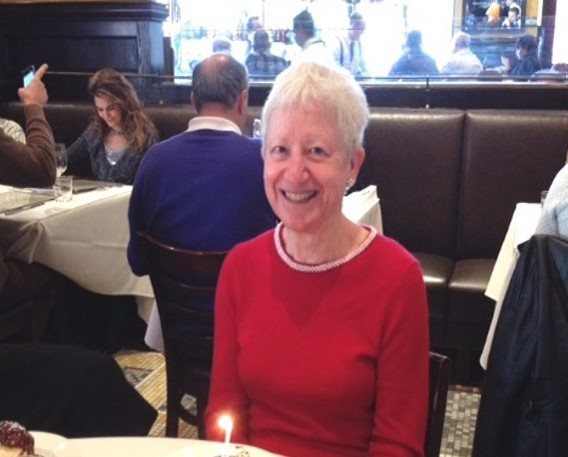
“God could not be everywhere, and therefore he created mothers." – Rudyard Kipling, English author
Posted on 5/12/2025 at 6:06:00 AM

What do actor Ashton Kutcher, supermodel Giselle Bundchen, NBA star Anthony Davis, and 24 icon Kiefer Sutherland have in common? They're all twins and you likely didn't know that. Hard to imagine anyone referring to any of them as part of a twin tandem as they are thought of as unique, one-of-a-kind individuals.
I am an identical twin. I'm commonly asked "What is it like to be a twin?" My visceral, sarcastic, inner-monologue retort is "What is it like to be a non-twin?" as I know nothing other than twin-hood.
My twin brother's name is Ben. It's hard to put the experience of growing up as an identical twin into words. For starters, like all twins, we shared a womb. And like 40 percent of twins, we invented our own twin language. This practice of turning baby babble into a form of "twin talk" even has a fancy name: cryptophasia.
Part of being a twin for me has been the struggle of developing my own identity while growing up looking exactly like another person. Few could tell us apart throughout grade school. Like many identical twins, we each had a “uniform” of sorts. In our case, "Benjie Blue" was the rule. So, I wore any color other than blue. Color coding is a common way to help others tell twins apart. It's better than some of the other methods used. A mother in China recently resorted to shaving numbers into her quadruplets' hair to indicate who's who.
For Ben and me, the color coding wasn't sufficient and we were often referred to as "the twins" or "them." It was challenging growing up as a twin trying to develop my own unique identity. As a result of looking alike, Ben and I sought ways to stand out. We both played sports and were naturally-mediocre athletes. We were on the same cross country team in junior high, and Ben branched out to a wide receiver / cornerback position on the high school football team. I loved playing pickup basketball and running, but gravitated towards art rather than organized sports.
Sports and working out became a way each of us could differentiate ourselves to develop that elusive identity. We chose to attend different colleges, where we both played intramural sports and lifted weights – very typical for undergrads. Over the years, we've both picked up different athletic pursuits at different times. Ben ran his first marathon in LA as a 23-year old. I ran my first marathon a decade later in Boston. I took on P90X, he enlisted the guidance of a seasoned trainer at the original Gold's Gym in Venice, CA. I played squash. He learned to surf. Athletics helped each of us define himself and become a true individual.
There are some well-known examples of twins who have excelled in the same sport, one often notably more gifted than the other. Jose and Ozzie Canseco in Major League Baseball. Brook and Robin Lopez in the NBA. Tiki and Ronde Barber of NFL fame. Emerging NCAA basketball superstars Aaron and Andrew Harrison. I met Tiki Barber recently and we discussed our experiences as identical twins. Unlike me, Tiki and his brother Ronde embraced everything twin. Both attended the University of Virginia. Both played football at a high level. However, in the NFL, they excelled in very different positions. Tiki was a hard-charging running back, while Ronde was a speedy cornerback. Tiki told me that he embraced being a twin growing up, but at the same time was intensely competitive with his brother and yearned to be recognized for his unique talents.
I hope you enjoyed learning about the twin experience and how athletics play a role in helping twins find their identities.
We'd love to hear from you. Who are your favorite twin or sibling athletes and how have they inspired you? Comment on our Facebook page at facebook.com/flytefitness or tweet us at @flytefitness.
Be Flyte Fit,
Jeremy Greenberg
Co-Founder & CEO
Flyte Fitness
Posted on 12/2/2026 at 8:45:00 AM