
SIGN UP FOR HEALTH AND FITNESS UPDATES
"Measure twice, cut once." - Proverb
Although one might fall into the trap of thinking that athletes are meat-heads who don't think, the reality is quite the opposite. Performing well requires focusing on numbers and math. Ask any athlete about the metrics she measures and she’ll spew off a litany of detailed numbers: amount of weight lifted, number of reps performed, number of sets completed, distance ran, minutes or seconds in each training interval, hours of sleep, glasses of water consumed, macronutrient percentages, and on and on.
Measurement is a critical requirement for making progress. If we don't know how we are performing, we can't assess what's working or not working, or how (or whether) we are moving forward towards re...
Read morePosted on 1/12/2025 at 5:55:00 AM


“Never make predictions, especially about the future.” - Casey Stengel, Major League Baseball outfielder and manager
It's now November. Whoa! Where has the year gone? As we replace the pumpkin and ghost decorations with turkey ones, we are one step closer to the end of 2015. It's been an exciting year for us at Flyte Fitness. We began selling our Core Flyte stability training tools and customers, fitness professionals, and distribution partners all gave us excellent feedback. As the year comes to an end, we are looking forward to a great 2016.
So, what's in store for fitness next year? Last week, the American College of Sports Medicine (ACSM), the largest sports medicine and exercise science organization in the world, gave us its annual predictions. ACSM published the results of its fitness trend forecast for 2016.
2,800 survey respondents –worldwide health and fitness professionals – differentiated "fads" (think Pizza Rat) from "trends" (think brick oven pizza) and focused on the areas that they think will influence the way that individuals will behave in the foreseeable future.
Here are the top five fitness trends for 2016 predicted by experts:
1. Wearable technology
Requirements: Cool tech gadgets
This trend went from “never-ranked” in the top 20, to “top-of-the-list.” The most common wearables used today are activity trackers that count steps walked, estimate heart rate and calories burned, and count hours of sleep. Many of these are integrated with smartphones and apps. There are wristbands (Fitbit), watches (Apple Watch), spectacles (Google Glass), and even earrings (we wrote about these last year).
The survey's lead author Walter Thompson, Associate Dean of the College of Education & Human Development at Georgia State University, said wearable technology helps by "gauging the intensity of effort during the workout... [and] also provides motivation between workouts."
We have written extensively about the importance of motivation and accountability when it comes up exercise. Technology that accurately monitors activity with little support required by users helps us see when we succeed and when we fall behind in clear, objective, and quantifiable metrics. I'm all for tools that help us track progress, and if they look cool too, great.
2. Body Weight Training
Requirement: Body.
The top trend in last year's survey, body weight training, took runner-up for 2016. Most personal trainers, group fitness classes, and popular home workout programs include body weight exercises that require only one's body. I was happy to see fitness professionals continue to recognize this trend as Core Flyte exercises take body weight exercises like planks, lunges, squats, push-ups, and rollouts to the next level.
3. High-Intensity Interval Training (HIIT)
Requirement: Clock.
High-intensity interval training (HIIT), HIIT, is considered an effective method for getting a limit-pushing workout in a short period of time. It is comprised of alternating bursts of activity (e.g., sprints) and brief periods of recovery. It can be used with both cardio and strength exercises. Our Everlast Lab Core Flyte class has a session consisting of HIIT with 45-60 seconds of all-out Core Flyte exercises alternating with short rest periods.
4. Strength Training
Requirement: Weights.
Strength training uses resistance in order to build muscle and anaerobic endurance. It typically involves the use of equipment such as free weights. This type of training evokes the nostalgia of the movie Pumping Iron, but is certainly not only for the body-building type. Many women shy away from using weights due to fear of getting "too bulky." This is an unfounded fear because using weights is a great way to tone muscles and build strength and does not create a bulky look for most women.
5. Educated, Certified & Experienced Fitness Professionals
Requirement: Knowledge.
Ignorance may be bliss, but when it comes to exercise, it stunts progress, leads to inefficient workouts, and causes injuries. Knowledgeable fitness professionals help set and establish best practices and find innovative ways to work out. Attending fitness conventions in LA, New York, Orlando, and Atlanta this year has broadened my awareness of just how many new types of educational formats are out there, and how many are coming. Fitness professionals will have new ways to expand their tool sets with each new exercise science course. And, yes, we have in the works a Core Flyte education course for fitness professionals!
We’d love to hear from you. Is the prediction for wearables overstated? Which trend do you think will be the most important in 2016? Comment below or on our Facebook page at facebook.com/flytefitness or tweet us at @flytefitness.
Be Flyte Fit,
Jeremy Greenberg
Co-Founder & CEO
Flyte Fitness
P.S. DON’T FORGET TO SIGN UP FOR FITNESS UPDATES! CLICK THE BOX AT THE TOP OF THIS PAGE!
Posted on 11/3/2026 at 12:30:00 AM

The average career for NFL players is astonishingly short: 3.3 years overall and 4.9 years for kickers and punters. It's easy for those of us watching professional football players on TV, in a stadium, or through the lens of fantasy football points to miss the fact that these well-trained athletes are human. We put them on a pedestal when they succeed and we trash them when they don't perform well.
March, I met John Carney while I was working out with our Flyte Fitness partner Steve Weatherford in Southern California at John’s gym, Carney Training Facility. John and Steve were using Core Flyte stability trainers to train themselves, their NFL friends, and John’s clients. My first impression of John was that he is incredibly humble, very knowledgeable in exercise techniques, and open-minded with a thirst for learning and improving.
John Carney, now 51 years young, has a lot to be proud of. He is one of the most celebrated kickers in NFL history. He has 2,062 points scored (fifth in NFL history), played 23 seasons in the NFL, is one of two NFL players in history with four decades of active play, and was the oldest ever to play in a Pro Bowl at age 44.
Last week, John and I spoke about his NFL experience, his training program for kickers and punters, and his philosophy on fitness and longevity.
An Unlikely Road to the NFL
Growing up in Palm Beach, Florida, John loved soccer and played on his high school’s soccer team. Despite his passion for soccer, football was calling him. John recalled, “If you were a male at our high school, it was expected that you would try out for the team.” He initially tried out as a wide receiver, but felt that his soccer experience plus “a little bit of work” would get him on the field as a kicker and a punter.
John went to a kicking camp in Fort Lauderdale led by NFL kicking star Garo Yepremian. He made the junior varsity team as a kicker and a punter his sophomore year. Then, he played on the varsity squad his junior and senior years.
And that's where his football career nearly ended. John said, “I never really planned on playing football after high school. I wanted to play collegiate soccer, but I didn’t receive a lot of phone calls for soccer.”
John walked on to the football team at Notre Dame, which was his father's favorite school. Notre Dame had then, and still has now, one of the most competitive and storied programs in all of college football. John followed fellow high school teammate Alonzo Jefferson, Florida’s all-time leading rusher at the time, to the Golden Dome.
As a freshman at Notre Dame, John made the traveling team as the kickoff specialist. He proceeded to earn the field goal duties his sophomore through senior seasons. It was an exciting experience for John: “I loved the challenge to kick against exceptional programs like USC, Penn State, and Miami,” he said.
John had an outstanding career at Notre Dame. His 51 field goals remain the most in history. Despite John’s talent and track record, it wasn't easy for him to make it into the NFL. He went undrafted and it took him three years to break through and make an active NFL roster for the regular season. Reflecting back, John said, “The long road paid off. I had an opportunity to work my craft and get better and stronger and more serious about becoming an NFL placekicker.”
Posted on 10/13/2015 at 12:19:00 AM
Watch this 15-second Core Flyte video to see how Core Flytes transform traditional floor exercises into creative, stability workouts. Core Flytes are the next generation of ball stability training, activating the core and engaging more muscles for a full-body workout. Core Flytes are portable stability trainers designed to roll with you, with three balls that roll under a stable base. Core Flytes are used by personal trainers, professional athletes, group fitness classes, and physical therapists worldwide.
Posted on 9/25/2015 at 5:18:00 PM
Watch this 15-second Core Flyte video to see how Core Flytes transform traditional floor exercises into creative, stability workouts. Core Flytes are the next generation of ball stability training, activating the core and engaging more muscles for a full-body workout. Core Flytes are portable stability trainers designed to roll with you, with three balls that roll under a stable base. Core Flytes are used by personal trainers, professional athletes, group fitness classes, and physical therapists worldwide.
Posted on 9/25/2015 at 5:14:00 PM
Core Flytes: Next Generation of Stability Training
For more information, go to our home page or purchase here.
Very portable: Lightweight, durable and easy to store.
For all fitness levels: Adjust the difficulty by using on surfaces with more or less friction or changing the range of motion.
Truly multi-surface: Moves well on any flat surface, including non-slip rubber gym floors, carpet and hardwood.
Inspires creative workouts: Introduces a completely new type of mechanics to popular exercises, and provides a platform for the innovation of new exercises.
Ergonomic design: Works comfortably under hands and feet to give you a full range of movement through all planes of motion.
Innovative technology: Uses patented ball transfer technology inspired by the aeronautics industry to facilitate omni-directional movement.
Wide-range of use: Used by personal trainers, professional athletes, group fitness classes, and physical therapists worldwide.
Each Core Flyte Pro package includes a pair of Core Flytes and a Core Flyte workout poster. Free workout videos are available online.
Posted on 8/3/2026 at 7:35:00 PM

“Reality is a lovely place, but I wouldn’t want to live there." – Adam Young, singer-songwriter
Virtual Reality Isn’t New, And Its Impact Is Gradually Increasing
Virtual reality has been around for a long time. In the mid-19th century, artists created 360-degree murals that wowed observers. In the 1920s, Edwin Link introduced the first flight simulator to train aspiring pilots. In 1957, Morton Heilig invented a device known as the “Sensorama.” The Sensorama was a booth that contained oscillating fans, speakers, mechanisms for emitting smells, and a viewing screen that displayed three-dimensional images. Heilig called this type of entertainment “experience theater.” He was trying to create a new, manipulated reality, one that felt real to the participant but was entirely artificial.
Virtual reality, or “VR,” uses technology to mimic real-life sensory experiences so powerfully that they seem real. Much of the use of VR today is for aeronautics simulation and gaming. Facebook acquired Oculus VR last year for $2 billion, with Facebook’s CEO Mark Zuckerberg proclaiming that “immersive, virtual, and augmented reality will become a part of people’s daily lives.”
Physical Effort Required For Video Games
The Realm is a VR system that puts gamers in a fantasy world, just like any video game console. This, however, is not merely the next generation of the Wii. Users must make a physical effort to progress through the game levels. Want to slaughter that ogre who’s in your way of saving the princess? You need to pick up your virtual axe and swing it with force, at the correct angle, and against resistance you’ll feel. The Realm experience seems real because you’ve got a VR headset on, so any way you turn you see the fantasy world even if for those playing from their parents’ basement. The Realm is set to be released in September, and will include fitness rehab and boxing games among its offerings. Perhaps the stereotype of gamers being Doritos-eating, Mountain Dew-drinking loungers is coming to an end.
Virtual Reality-Inspired Fitness Classes Are Emerging
In Hong Kong’s Pure Fitness studio, they have spin classes that are a bit different than the trendy ones in large U.S. cities. Like any other spin class, there are rows of stationary bikes. Unlike the others, participants are inside a room with a 270-degree screen that surrounds their field of vision. They are part of what’s been deemed “immersive fitness.” The presentation of a visual and auditory experience that can take you away to a different place while you’re working out. It can be daytime during the night, snowy during summer, hilly or flat, smooth or rough terrain, Paris when you’re in Hong Kong, or racing against others when you’re alone. Pure Fitness is planning to expand to other class formats, including yoga, as well. Early morning yoga on the beach will never be so attainable.
Dance With Others When You’re By Yourself
Even Zumba, the monstrously popular dance-focused fitness sensation with over 200,000 locations worldwide, has joined the VR mix. As if 15 million participants isn’t enough, Zumba wants to show potential attendees what the class experience is like even if they can’t make it to a class. Partnering with VR company YouVisit, Zumba is using a 360-degree immersive video to demonstrate what it’s like to be part of the Zumba community. Zumba CEO Alberto Perlman, says, “We tried the VR demo in the office and every guy who put the headset on started dancing, and that never happened with [regular] videos.” People who go to gym classes tend to feel great afterwards. It’s getting to the class (or the gym) that is often the toughest hurdle to overcome. Zumba has expanded classes into a broad range of categories that are geared towards children, older adults, pool settings, and core workouts. In March, I met Perlman and we discussed the possibility of adding Core Flytes to the Zumba suite of classes. For Zumba, fostering a robust exercise community is critical. Abi Mandelbaum, CEO of YouVisit, says, “One thing virtual reality might do is restore a human connection for people who work out at home. VR can help people feel as if they are actually there, with people, doing a fitness activity; this can be a huge motivator. Imagine a virtual reality experience that lets viewers bike in the Tour de France or run the Boston Marathon.”
We'd love to hear from you. How do you think virtual reality will change working out for you? Comment below or on our Facebook page at facebook.com/flytefitness, or tweet us at @flytefitness.
Be Flyte Fit,
Jeremy Greenberg
Co-Founder & CEO
Flyte Fitness
P.S. DON’T FORGET TO SIGN UP FOR FITNESS UPDATES! CLICK THE BOX AT THE TOP OF THIS PAGE!
Posted on 7/7/2025 at 7:49:00 AM
Core Flyte Plank Pike: PFP Fit-Pro Exercise of the Week
Watch this Core Flyte Plank Pike video to see how Core Flytes transform traditional floor exercises into creative, stability workouts. Core Flytes are the next generation of ball stability training, activating the core and engaging more muscles for a full-body workout. Core Flytes are portable stability trainers designed to roll with you, with three balls that roll under a stable base. Core Flytes are used by personal trainers, professional athletes, group fitness classes, and physical therapists worldwide. The NFL's fittest man, Super Bowl champion Steve Weatherford, demonstrates.
For more workout videos, click here or go to the Workouts tab on our website.
Posted on 6/30/2015 at 9:02:00 AM
Posted on 2/3/2026 at 2:31:00 PM
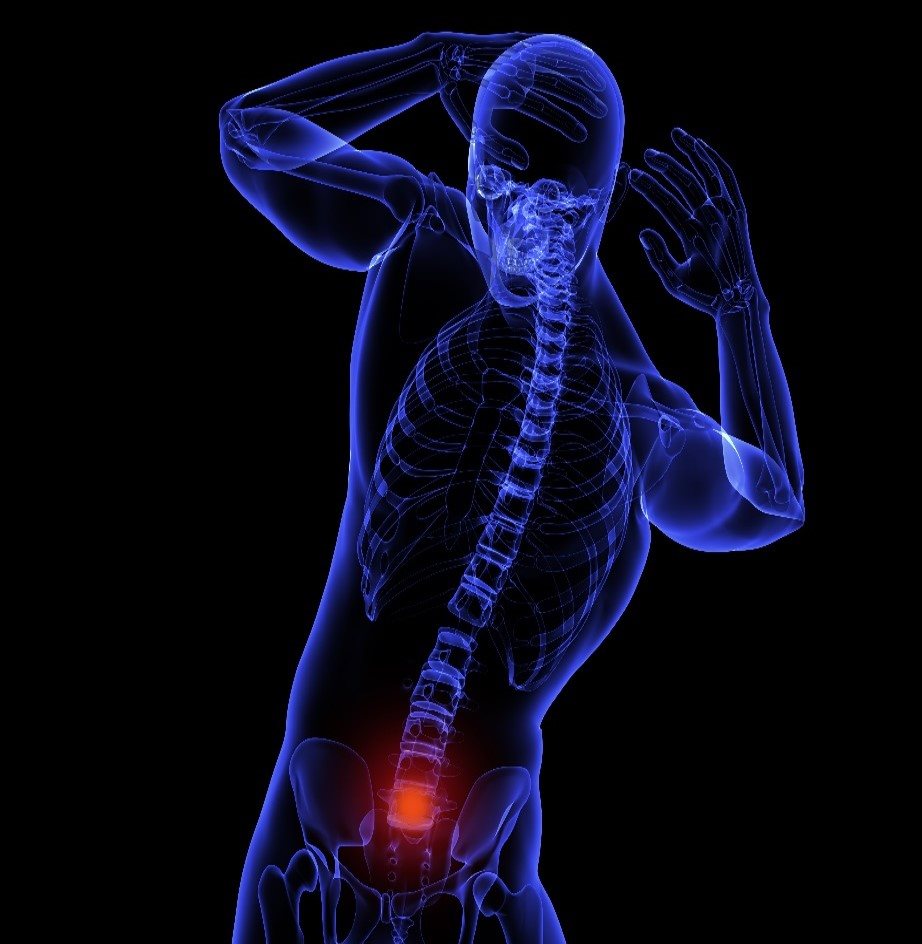
There are 1.4 million people who are currently on active duty in the United States Armed Forces. It is imperative that those who serve are physically active. Exercise regimens can be strenuous. Like many of us, they often suffer from training and sports-related injuries, leading to millions of lost active duty days each year. A recent Department of Defense report states that “training-related injuries have been identifıed as the leading cause of clinic visits and have a substantial impact on the readiness of the force due to the amount of limited duty time they cause.” It’s extremely important for the military to understand how to train properly in order to minimize injury risk.
The Military Training Task Force (MTTF) was recently tasked with making scientific-based recommendations to prevent injuries related to physical training. A group of health and fitness experts, The Joint Physical Training Injury Prevention Working Group, evaluated 40 physical training-related injury prevention strategies. The group concluded that six strategies, with varying levels of priority, were recommended for implementation across in all four military services. Five of the six were protective measures, including avoiding overtraining and wearing mouth guards. There was only one recommendation prescribed specific exercises. The recommendation: “Perform multi-axial, neuromuscular, proprioceptive, and agility training.” The report concluded that there is “good evidence that injuries are reduced by increasing the proportion of physical training time devoted to exercises that vary musculoskeletal stress in multiple plains and improve body coordination, position sense, and agility.”
Allow me to help translate.
I’ll help break down the one training recommendation from the military for injury prevention:
Multi-axial: Many planes of motion.
Movements that go in various directions help strengthen the core muscles, as well as improve stability. Often, tools are required to facilitate such movements, such as the Core Flyte.
Neuromuscular: Coordinated muscle movement.
Neuromuscular training “is used to teach your body better habits for stability” by coordinating mental perception with physical behavior. Examples include stretching and balancing while performing specific movements.
Proprioceptive: Body position sense.
This is all about knowing where a body part is without having to look. Improved prioception enhances balance, coordination, reaction time, and posture.
Agility training: Non-linear movement.
Agility training varies from strength exercises to stretching. These activities strengthen secondary and supporting muscles and tendons.
This was an exciting report to read as a cofounder of Flyte Fitness, as our Core Flyte product enables people to train using all of these methods. The Core Flyte facilitates movement along many planes (on any flat surface), enables coordinated muscle movements as multiple muscle groups are activated, improves body position sense after completing routines, and supports agility training.
We'd love to hear from you. How have you used these training methods to prevent or rehab an injury? Comment below or on our Facebook page at facebook.com/flytefitness, or tweet us at @flytefitness.
Be Flyte Fit,
Jeremy Greenberg
Co-Founder & CEO
Flyte Fitness
Posted on 1/13/2015 at 2:45:00 PM