

SIGN UP FOR HEALTH AND FITNESS UPDATES

"Hockey requires you to have strength, endurance, speed and agility, and power. It also has a prerequisite of skating. Oh, and there’s a ton of body contact.” – Christopher Costa, strength & conditioning coach
Posted on 4/21/2015 at 8:05:00 AM


"Since I've done Pilates, I'm much better looking and 4 feet taller.” - Rich Beem, Former Professional Golfer
I recently took a Pilates class at my gym. It was the first I had ever taken. We’ve had a lot of Pilates instructors purchase Core Flytes and create classes with them, so I figured I ought to gain a first-hand understanding of what Pilates is all about. I walked in to the class thinking this was going to be a breeze. I walked out humbled and better-educated about the challenges and benefits of Pilates.
Contrary to What Many Think, Pilates is Not Just for Women
“I have been teaching Pilates for 14 years,” says Master Pilates Instructor Johanna Baumbach. “During this time, I have seen a few handfuls of men take advantage of what we can offer. Those who have remained loyal have seen major transformations.” There are many misnomers about Pilates: from “it’s a female thing,” to “it’s too easy,” to “it’s boring.” I’m not sure there’s anything more “manly” than how Pilates began. Joseph Pilates originally created the fitness regimen named after him to train soldiers and police in Europe. He wanted them to have a stronger core, a solid posture, and improved balance and coordination.
Real Men Do Pilates
Olympic champion speed skater Shani Davis incorporates Pilates into his training regimen. Davis recalls his first Pilates session: “The teacher was crazy strong. I was one of only two males and I realized all the ladies were whipping me. My male ego kicked in, I can’t let these ladies beat me. I had a lot of respect for it from that first day—especially as I was sore for a month after that first time.” Muscular athletes and celebrities, including NBA Superstar LeBron James and super-middleweight boxing champ Andre Ward, are Pilates enthusiasts. Rich Beem, winner of the 2002 PGA Championship, said, "Since I've done Pilates, I'm much better looking and 4 feet taller. Seriously, I'm now so stretched out and have such great posture that I look and feel like a different person."
Pilates is All About the Core
There are over 500 formal movements in the Pilates system. These exercises are dedicated to strengthening core muscles. Side effects include improved posture, standing taller, improved concentration, lower stress, reduced back pain, and increased flexibility. As I wrote in a blog a few weeks ago, “the core is a facilitator. It controls the force of other muscles in our bodies.” It is all about control, rather than force. It is no surprise that Joseph Pilates called his method “Contrology,” as it requires one to have control over body mechanics, breathing, and posture. A stronger and more flexible core helps us have this control.
You Don’t Need a Lot of Equipment
It is possible to perform a Pilates workout without any equipment. The class I went to had no equipment and it certainly served its purpose. There are, however, many forms of apparatuses to help facilitate the control and movement required. Smaller forms of equipment used for Pilates include Pilates mats, resistance bands, balance balls, and Core Flytes. Many Pilates classes use large machines known as reformers, which typically cost a few thousand dollars.
No excuses, right? Then give it a try! We'd love to hear from you. Tell us about your experience with Pilates? Comment below or on our Facebook page at facebook.com/flytefitness, or tweet us at @flytefitness.
Be Flyte Fit,
Jeremy Greenberg
Co-Founder & CEO
Flyte Fitness
Posted on 3/31/2015 at 6:31:00 AM
“All sports are games of inches. Whether it be one step faster or half an inch higher. Increased athleticism puts you into a position to make a better play.” – John Vickers, speed, strength & conditioning coach
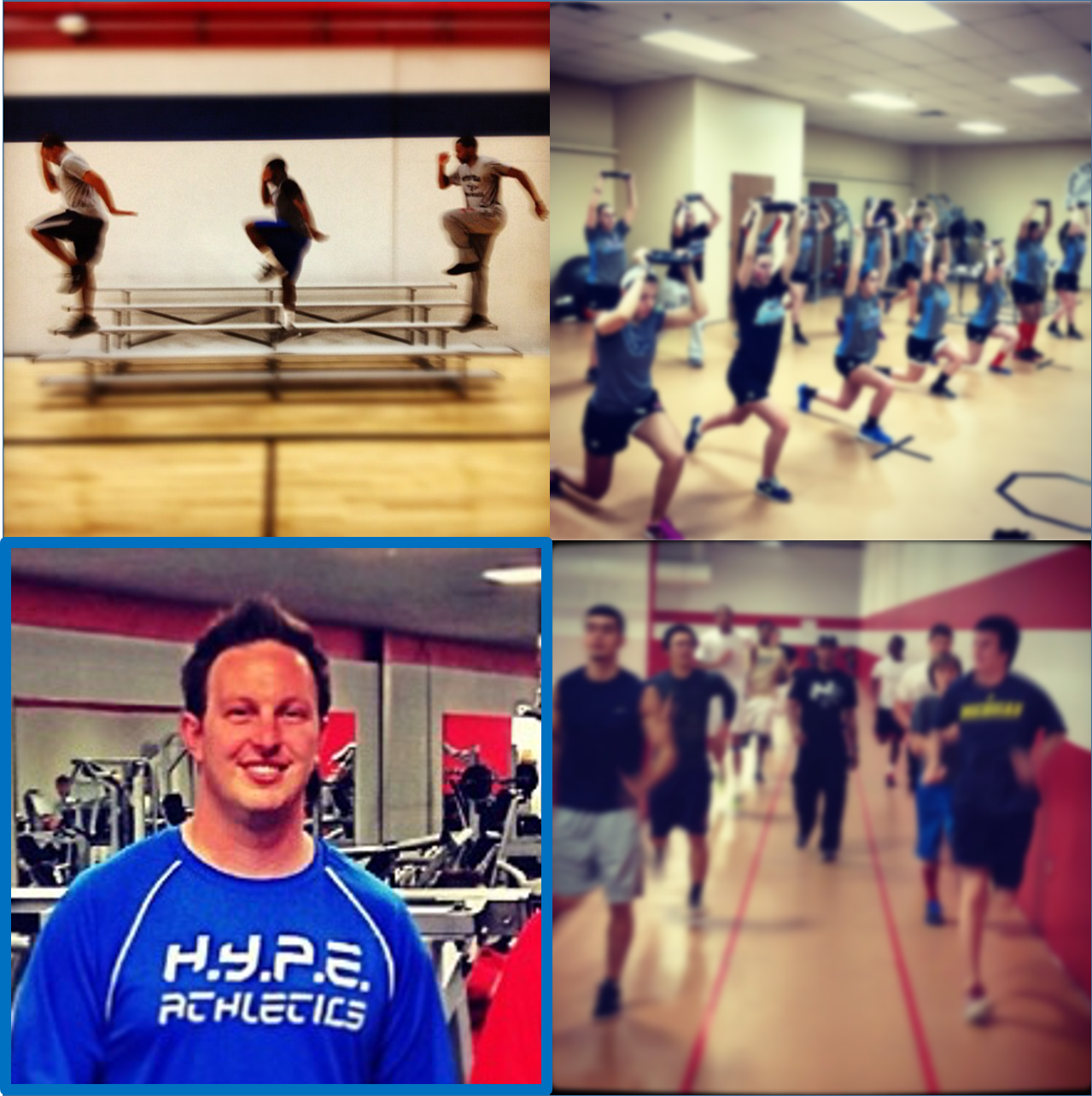
John Vickers has been passionate about improving athletic performance since his college football playing days. He was a defensive end and routinely found himself injured and stuck on the sidelines. Initially planning to study computer science, he switched gears and dove head-first into the world of exercise science. Through his experience at a sports performance facility, John learned the value of sports-specific training for improved performance and injury prevention. John says this immersive experience helped him become “more athletic, faster, and more confident. That was the moment I decided what I wanted to do with my life.” Today, John is the Head Speed, Strength & Conditioning Coach at HYPE (Helping Youth Progress and Excel) Athletics in Detroit, Michigan.
John and I recently spoke about his experience as a sports coach, his training philosophy, and the importance of core muscle development. John coaches a range of athletes, from a seven-year-old to major professional league athletes. His players were among the first athletes to use Core Flyte for sports-specific training.
Developing Talent in Detroit
John focuses on high school athletes, however, he has coached a number of successful professional athletes, including Olympic champions and players in the NFL, NHL, NBA, and MLB. Many of these athletes have strong ties to the Detroit area.
Jonas Gray, running back for the New England Patriots, who recently became a Super Bowl champion. Jonas has been under John’s tutelage since his high school days in Pontiac, Michigan. Will Gholston, currently training with John, is a defensive end for the Tampa Bay Buccaneers and a Detroit native. John works with Dave Moss, a right wing for the Arizona Coyotes. Dave grew up in Livonia, Michigan. Center fielder Daniel Fields was drafted by Detroit Tigers out of his Detroit high school. George Winn, from Southfield, Michigan, is a running back for the Lions. The list goes on.
Perhaps his most famous athletes have been the ice dancers that he has coached over the years. Canadians Tessa Virtue and Scott Moir won the gold medal in pairs ice dancing at the Vancouver Winter Olympics in 2010. Americans Meryl Davis and Charlie White won the gold medal in the same event in Sochi in 2014. Davis was also part of the winning duo on ABC’s Dancing with the Stars last year. It is for these Olympians that John expresses great admiration: “They're unbelievable athletes. They work as hard as everybody I've worked with. They'll do everything that any of my football players will do. They'll run with them. They'll jump with them. They are highly conditioned athletes.”
Injury Prevention as a Training Focus
There is no doubt that John and his HYPE Athletics team get results. I asked him what he does differently compared to other coaches. John focuses on good form, educated care for the body, and strengthening the core. John says he has achieved great results “in increasing athleticism while reducing the chance of injury. I haven't had many players have major injuries in the offseason.”
For John, form is key. John says, “It's always about quality. I don't care about quantity. I'd rather see a guy do one or two good reps than ten poor reps. I've seen conditioning programs that are way too excessive. For example, I saw a [NFL team name redacted] player's program recently that had him doing 36 40-yard dashes. At that point, you're just wasting your time. The quality is down. The potential for injury is up. I've seen guys get loaded up with weights even after severe pain which leads to serious injuries.”
Injury prevention is not considered the sexiest part of sports conditioning training, but it is the most vital. If you’re badly hurt, you don’t play. Just like John didn’t for most of his college football career. John integrates injury prevention into his training regime by doing what he calls “a lot of prehab work to help with mobility and flexibility.” He continues, “We focus on balance and stability but also on the things where there are typically issues that arise within a certain sport. For example, a lack of glute activation or a hip set at an incorrect angle can cause knee injuries.”
Core Strength and the Core Flyte
John’s coaching philosophy is that everyone can try to increase their athleticism. John says, “No matter what sport you play, the more athletic you are the better chance you have at succeeding. All sports are games of inches. Whether it be one step faster or half an inch higher. It puts you into a position to make a better play.”
John’s athletes integrate strengthening their core muscles into every workout. The core is a bit like a car’s steering wheel for the Motor City coach. It does not provide force, but it is required to move in the right way with the right amount of force. John explains, “The core is to a certain point the most important thing of all. If your core is weak, if you're unable to stabilize movement, it's going to be difficult to translate force. This is why we do some form of core work every day.”
“Very rarely we'll do isolated movements like crunches and sit-ups. We do a lot with the Core Flyte. With the Core Flyte, I'm able to broaden my horizons and create more variations. We do new types of planks, single arm exercises, different forms of rollouts, lateral or step forward lunges... There are so many things we use it for. We use them on a rubber floor, and they work really well.” John’s had his athletes using the Core Flyte for the last month and he shared a clip of Bucs defensive end Will Gohlston doing ab rollouts with it.
We'd love to hear from you. What do you do with yourself or your athletes to prevent injuries and strengthen the core? Comment below or on our Facebook page at facebook.com/flytefitness, or tweet us at @flytefitness.
Posted on 3/10/2025 at 6:33:00 AM

While most Americans prepare to sink into comfortable couches, overeat, and watch the big game this Sunday with family and friends, there are two teams preparing to compete in the Super Bowl. DeflateGate press conferences aside, the players on the Patriots and Seahawks are getting ready for one of the biggest competitive nights of their lives. Last minute workouts and strategy sessions may make the difference between runner-up and Super Bowl champion. However, in order to make it to the big game, NFL players need to work hard to prepare for a grueling season, compete with some of the best athletes in the world, and ultimately prevail. Today, we salute five NFL players with exceptional workout discipline who have gone well beyond the call of duty to make their bodies a competitive advantage.
Here are 5 Super Bowl Workout Habits of Elite NFL Players
1. Jerry Rice, Wide Receiver
Rice is widely regarded as the best wide receiver in NFL history. He was a key member of three Super Bowl champion teams with the San Francisco 49ers and was selected to the Pro Bowl 13 times in 20 seasons in the NFL. Rice became a legend for his record-setting career on the football field. Off the field, often training alone, he followed a disciplined and intense workout regimen that kept him at the top of his game for such a long period of time. During the off-season, when many athletes rest, Rice had a six-day-a-week routine that he created to keep himself in shape. His typical regimen consisted of morning runs that included sprinting up the steepest parts of hills, and afternoon weight training sessions that were so tough that when his teammates joined him, they would often get sick from the intensity. Oh, and this doesn’t include actual team practices in which he was known for staying longer and hustling harder than anyone else.
2. Rod Woodson, Cornerback and Safety
Woodson was a dangerous defensive player for 17 years in the NFL. He won a Super Bowl with the Baltimore Ravens, and holds the NFL record for most interceptions returned for touchdowns. Like Rice, Woodson didn’t take time off from staying in shape. Woodson said that during his career, he “maintained a foundation of working out throughout the whole offseason; either riding a bike, jogging on the treadmill or jogging around the neighborhood. I kept a foundation there, so once I wanted to get back into high-core training, I already had a baseline set.” Woodson had a big sweet tooth during his playing days: “I loved ice cream, I loved chips and I loved candy,” he said. Despite his not-so-perfect eating habits, his strenuous workouts kept him in great shape and enabled him to be one of the fastest players in the league.
3. C. J. Spiller, Running Back
Clifford "C. J." Spiller is a 27-year-old running back and return specialist for the Buffalo Bills, who’s coming off an injury-plagued year. Despite this, Spiller is considered one of the fittest players in the NFL due to his speed and jumping ability. He eats healthy, runs hills, pulls sleds, and practices mixed martial arts to improve his conditioning. Bottom line for Spiller: “I do a lot of exercising,” he said. Spiller gets away from chilly Buffalo during the off-season and trains in California. He said, “When I’m in California training, they have the sand dunes and we do a lot of workouts there as well. Even when I do take a little mini-vacation, I’ll wake up early and go run on the beach.”
4. Jared Allen, Defensive End
Allen is a stud defensive end for the Chicago Bears, better known for his years devastating offenses as a Minnesota Viking. Allen is a five-time Pro Bowl honoree with over 130 sacks in his career. At 6’ 6” and 270 pounds, he keeps his power a top priority. Allen focuses on weightlifting during the off-season. His leg squat, power clean and deadlift regimens go into the 300-plus pound ranges. His all-time squat record is 605 pounds. Wow. “I think the most important part of the game for any football player is leg strength. All your explosion comes from your legs,” Allen said.
5. Steve Weatherford, Punter
The punter is perhaps the least respected player on a football squad; however, Weatherford is noted for his epic physique. He is a member of the New York Giants and made critical punts in their 2012 Super Bowl victory, which led Bleacher Report’s Gary Davenport to contend that Weatherford should have been the MVP of the game. Weatherford said much of his determination comes from what he calls “little man” syndrome. Weatherford said, “As a kid, I was always very athletic and very fast. I was always good at sports. I wasn’t big and I wasn’t strong. When I was 13, going into my freshman year, I decided that if I was going to be the short guy on the team, I’m going to work as hard as I can to get the most out of my body.” Weatherford stresses the importance of not relying on one’s talent alone. He said, “Ability will only get you so far. It’s all about football all the time. Even though I don’t play an athletic position, I still try to take that same mindset of: If it’s not going to help me get better at what I want to get better at, then I’m not going to do it. I work really hard at my craft, but I also work hard in the weight room, and I’m very disciplined with my diet as well.”
We'd love to hear from you. What professional athlete’s workout regimen has inspired you? Comment below or on our Facebook page at facebook.com/flytefitness, or tweet us at @flytefitness.
Be Flyte Fit,
Jeremy Greenberg
Co-Founder & CEO
Flyte Fitness
Posted on 1/27/2015 at 6:33:00 AM

Flyte Fitness is a startup. We are on the cusp of completing our first production run of the Core Flyte. We are scrappy and passionate about bringing an innovative technology to the fitness industry.
Posted on 8/12/2025 at 5:35:00 AM